

In the earlier stages of a UAE startup, a Free Zone license is often the ideal incubator. It offers 100% foreign ownership, attractive tax efficiencies, and a swift, straightforward setup process. However, as 2026 unfolds, a growing number of high-growth companies are finding that the structure that launched them is no longer the structure that can scale them.
If your business is hitting a plateau, the constraint may not be your product or your market. It may be your license. Here is how to determine when the time has come to make the move to the Mainland.
You Need Direct Access to the UAE Local Market
Free Zone licenses are well-suited for international trade, export-oriented businesses, and digital services. However, they impose meaningful restrictions on direct onshore commercial activity within the UAE.
- The Old Way: Engaging a local distributor to access the UAE market, and surrendering a portion of your margin with every transaction.
- The Growth Way: A Mainland license, regulated by the Department of Economy and Tourism (DET), allows you to sell directly to any consumer or business across all Emirates, with no intermediary and no margin erosion. For any 2026 growth strategy that involves opening physical retail outlets, service centres, or client-facing branches, a Mainland structure is not optional. It is essential.
You Are Ready to Pursue Government Contracts
The UAE government remains one of the world’s most active and well-funded buyers across sectors including technology, infrastructure, sustainability, and smart city development.
- The Restriction: The majority of government and semi-government tenders are exclusively available to Mainland-licensed entities. Free Zone companies are categorically excluded from most public procurement processes.
- The Opportunity: Transitioning to the Mainland unlocks access to substantial procurement contracts with entities such as DEWA, RTA, and various federal ministries. These contracts represent the kind of scalable, recurring revenue that institutional investors actively look for when evaluating growth-stage businesses.
Your Team is Outgrowing Flexi-Desk Arrangements
Within Free Zones, visa allocations are directly tied to office square footage, and entry-level flexi-desk packages are typically capped at two to three employment visas.
- The Breaking Point: If your growth trajectory requires hiring a team of ten or more individuals, the cost of upgrading to a sufficiently large physical office within a premium Free Zone will frequently exceed the cost of securing comparable Mainland premises.
- The Solution: Mainland licenses offer significantly greater flexibility in visa allocation. Quotas are determined by the size of your physical premises, and those premises can be located anywhere across the UAE, giving you far broader options in terms of both cost and location.
New for 2026: The Dual Licensing Strategy
For many businesses, the choice between a Free Zone and the Mainland is no longer binary. Under Executive Council Resolution No. 11 of 2025, eligible Free Zone companies can now apply for a Mainland Branch License, allowing them to maintain their Free Zone entity while simultaneously accessing the onshore market. This dual structure is an increasingly popular option for businesses that wish to preserve existing Free Zone benefits while expanding their commercial reach.
Feature | Free Zone (Standard) | Mainland (DET) |
Market Reach | International / Intra-Zone | UAE-Wide and International |
Visa Quota | Limited by package | Flexible, based on office size |
Physical Location | Within the specific Free Zone | Anywhere in the UAE |
Government Tenders | Generally restricted | Fully eligible |
How to Transition Without Disruption
The process of transitioning to a Mainland license in 2026 is materially simpler than it was in previous years. The requirement for a 51% local partner has been removed for the majority of commercial activities, making the move both more accessible and more commercially attractive for foreign-owned businesses.
- Obtain a No Objection Certificate (NOC): Secure formal clearance from your current Free Zone authority before initiating the transition.
- Reserve Your Trade Name: Verify that your preferred trade name is available on the DET registry and complete the reservation process.
- Secure a Physical Office: Lease a compliant commercial space and obtain your Ejari, the officially attested lease agreement required for license issuance.
- Notify Your Bank Early: This is the most operationally critical step in the process. Inform your banking institution well in advance of the license migration to ensure your corporate accounts remain active and uninterrupted throughout the transition.
Do not allow your legal structure to become the ceiling for your revenue potential. If your growth strategy for the next 24 months is anchored in the domestic UAE market, the Mainland is where your business belongs.
Partner with HLB HAMT for Expert Company Restructuring
Restructuring a business entity in the UAE requires more than a procedural checklist. It demands a thorough understanding of regulatory frameworks, tax implications, banking requirements, and the commercial nuances that determine whether a transition creates value or creates complications.
At HLB HAMT, our Company Restructuring team has guided businesses across the UAE through every form of structural transition, from Free Zone to Mainland migrations and dual licensing arrangements, to group restructurings, mergers, and entity consolidations. With over 25 years of experience operating in the UAE market, we bring the depth of knowledge and the network of relationships that make complex transitions straightforward.
Why Choose HLB HAMT?
25+ Years of UAE Market Expertise: Our team has navigated every significant regulatory development in the UAE business environment, including the introduction of Corporate Tax, the evolution of Free Zone legislation, and the liberalisation of Mainland ownership rules. That accumulated knowledge directly benefits every client engagement.
A Dedicated, Multidisciplinary Restructuring Team: Company restructuring touches corporate law, tax planning, banking, real estate, and HR simultaneously. Our team brings specialists from each of these disciplines together under a single coordinated engagement, eliminating the fragmentation and miscommunication that arise when multiple unconnected advisors are involved.
Customised Solutions, Not Generic Frameworks: Every business has a different ownership profile, revenue model, client base, and risk appetite. We do not apply standard templates. Every restructuring recommendation we make is built around your specific commercial objectives, regulatory obligations, and long-term growth strategy.
End-to-End Execution Support: We do not limit our involvement to advice. Our team manages the full transition process on your behalf, from Free Zone NOC applications and DET registrations through to Ejari documentation, bank account migration coordination, and post-transition compliance setup.
Regional Network, Local Precision: As part of the HLB International network, we combine global advisory capabilities with precise, on-the-ground knowledge of UAE regulatory requirements, ensuring that your restructuring is executed correctly the first time.
Contact our Company Restructuring team today to begin your transition assessment.
Frequently Asked Questions
Do I need a local UAE national partner to set up a Mainland company in 2026?
For the majority of commercial activities, no. Following amendments to the UAE Commercial Companies Law, 100% foreign ownership is now permitted for most business activities on the Mainland. Certain strategic sectors, including oil and gas, defence, and specific professional services, continue to require a UAE national partner or agent. A restructuring advisor can confirm the applicable ownership rules for your specific activity.
Will transitioning from a Free Zone to the Mainland affect my existing corporate bank accounts?
It can, which is why notifying your bank early in the process is one of the most important steps in any Mainland transition. Banks require updated licensing documentation to maintain account validity, and delays in communication can result in account restrictions during the transition period. HLB HAMT coordinates directly with banking institutions on behalf of clients to manage this process smoothly.
Can I retain my Free Zone entity while also establishing a Mainland presence?
Yes. Under Executive Council Resolution No. 11 of 2025, many Free Zone companies are now eligible to apply for a Mainland Branch License, allowing them to operate in both environments simultaneously. This dual structure is particularly well-suited to businesses that have significant international operations alongside a growing domestic UAE client base.
How long does the Free Zone to Mainland transition typically take?
The timeline varies depending on the Free Zone authority, the nature of the business activity, and the responsiveness of third parties such as banks and landlords. In most cases, a well-managed transition takes between four and eight weeks from the point of NOC application to the issuance of the new Mainland license. Delays most commonly arise from incomplete documentation or late engagement with banking institutions.
How does HLB HAMT approach a company restructuring engagement?
We begin every restructuring engagement with a comprehensive diagnostic review of your current structure, including your license type, ownership arrangement, tax position, banking relationships, and commercial contracts. From this foundation, we develop a tailored restructuring roadmap that outlines the recommended structure, the steps required, the timeline, and any associated costs or regulatory considerations. Our team then manages the full implementation process, keeping you informed at every stage.
About the Author
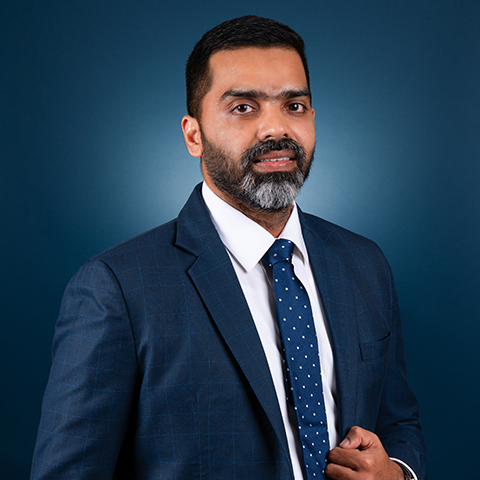
Lavin is a dynamic leader with over 15 years of experience in the field of business consultancy. As the Head of the Business Consultancy division at HLB HAMT, he has consistently demonstrated his ability to accomplish diverse tasks and drive the division towards success. His journey began with a prominent publishing company in India before he transitioned to Dubai to pursue his career aspirations.