


The United Arab Emirates is rapidly transforming into a regional hub for the circular economy. With the expansion of the federal single-use plastic ban in January 2026, the demand for food-grade recycled Polyethylene Terephthalate (rPET) has shifted from a corporate CSR goal to a critical supply chain necessity.
For investors and entrepreneurs, establishing a PET recycling plant in the UAE offers a strategic entry into a market projected to grow at a CAGR of over 5.5% through 2032.
Market Opportunity: Why Establish a Polyethylene Terephthalate Recycling Plant Now?
The UAE produces approximately 1.5 million metric tonnes of plastic waste annually. Currently, only a fraction is recycled, but new regulations are forcing a massive shift:
As of January 1, 2026, the UAE has prohibited the import and manufacture of various single-use plastics. Crucially, products made from locally recycled materials are exempt from many of these restrictions, providing a massive competitive edge to domestic recyclers.
The food and beverage (F&B) sector accounts for over 50% of packaging demand in the UAE. Major beverage brands are now scrambling to secure high-clarity rPET flakes to meet “bottle-to-bottle” sustainability mandates.
With the UAE’s world-class logistics (Jebel Ali, Khalifa Port), a local plant can serve as a primary exporter of rPET to the wider MENA region and Europe, where recycled content thresholds are becoming mandatory.
The PET Recycling Process
A modern facility must transition waste into high-purity resin that meets international food safety standards (such as EFSA or FDA).
Key Technical Stages:
1. Collection & Sorting
Utilizing Near-Infrared (NIR) technology to separate clear PET from colored plastics and contaminants (PVC, PE lids).
2. Cold & Hot Washing
Removing labels, adhesives, and organic residue using caustic soda and specialized detergents.
3. Mechanical Shredding
Transforming bottles into uniform flakes.
4. Extrusion & Decontamination
This is the most critical phase for the packaging industry. Using Solid State Polymerization (SSP), the flakes are melted, filtered, and re-poly-merized to restore intrinsic viscosity (IV) and remove volatile impurities, making the plastic food-contact safe.
Business Setup & Regulatory Landscape
Operating a recycling plant in the UAE requires coordination with several federal and local bodies:
Most industrial recycling plants opt for Free Zones like RAKEZ (Ras Al Khaima) KEZAD (Abu Dhabi) and Dubai Industrial City (DIC) to benefit from 100% ownership and duty-free imports of machinery. You must obtain environmental clearances from the Ministry of Climate Change and Environment (MOCCAE) and local municipalities (e.g., Dubai Municipality or Tadweer in Abu Dhabi). To supply the packaging industry, your rPET must be certified by the UAE Ministry of Industry and Advanced Technology (MoIAT).
Ready to Launch Your PET Recycling Plant in the UAE?
HLB HAMT brings 25 years of experience in business setup, company formation, and regulatory compliance across the UAE. We guide investors through every step from selecting the right free zone in RAKEZ, KEZAD, or Dubai Industrial City to securing MOCCAE approvals, MoIAT certification, and environmental clearances for recycling projects. Our team ensures smooth coordination with local authorities and helps structure your operation to maximize incentives available in the UAE.
Contact HLB HAMT today for expert advice on establishing your PET recycling facility in the UAE today.
Frequently Asked Questions
How secure is the long-term demand for food-grade rPET in the UAE after the 2026 single-use plastic ban?
Demand stays strong because the ban exempts products made from local recycled materials. UAE beverage brands must switch to rPET for bottle-to-bottle packaging to comply and meet sustainability targets.
Can a UAE plant compete with cheap virgin PET from GCC producers?
Yes, mainly through the regulatory advantage. Local rPET benefits from import bans on certain virgin-based single-use items, giving it a protected edge in the domestic market.
. Is feedstock supply reliable enough in the UAE to run at high capacity?
PET waste exists in large volumes from F&B, hotels, and events, but collection needs strong partnerships with municipalities such as Tadweer or Dubai Municipality and waste aggregators.
What export potential exists for UAE-made rPET flakes or pellets?
Jebel Ali and Khalifa Port provide excellent access. Growing recycled-content rules in Europe and parts of MENA create steady export demand for high-purity, food-contact-safe rPET.
How does the UAE free zone setup help compared to mainland or other MENA countries?
Free zones in RAKEZ, KEZAD, and Dubai Industrial City offer 100% ownership, duty-free machinery imports, and streamlined approvals, making the UAE more investor-friendly than many regional peers.
About the Author
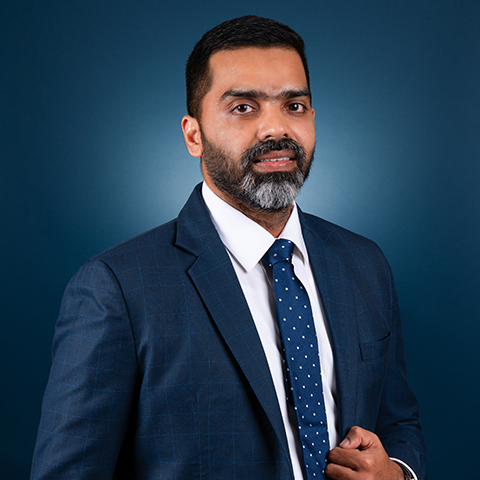
Lavin is a dynamic leader with over 15 years of experience in the field of business consultancy. As the Head of the Business Consultancy division at HLB HAMT, he has consistently demonstrated his ability to accomplish diverse tasks and drive the division towards success. His journey began with a prominent publishing company in India before he transitioned to Dubai to pursue his career aspirations.